

What is Deaf Identity?
Deaf identity refers to how deaf people see themselves and their place in the world. It is shaped by personal experiences, the use of sign language, and being part of the Deaf community. Deaf identity is not just about being deaf; it includes cultural, linguistic, and social aspects that make each person unique.
Why is Deaf Identity Important?
Deaf people feel connected to others who share similar experiences. This develops their Deaf identities. It also allows deaf people to recognize their culture and history. Recognizing Deaf identity can empower individuals and challenge stereotypes about deafness as a disability and overcome the barriers such as communication and access.
Types of Deaf Identities
Deaf identity is diverse and can include:
- Linguistic Identity: Many deaf people identify strongly with sign language, which is their primary way of communicating. Sign language is not just a tool; it is part of their culture and history.
- Cultural Identity: Being part of the Deaf community means sharing traditions, values, art, and stories that belong to deaf culture.
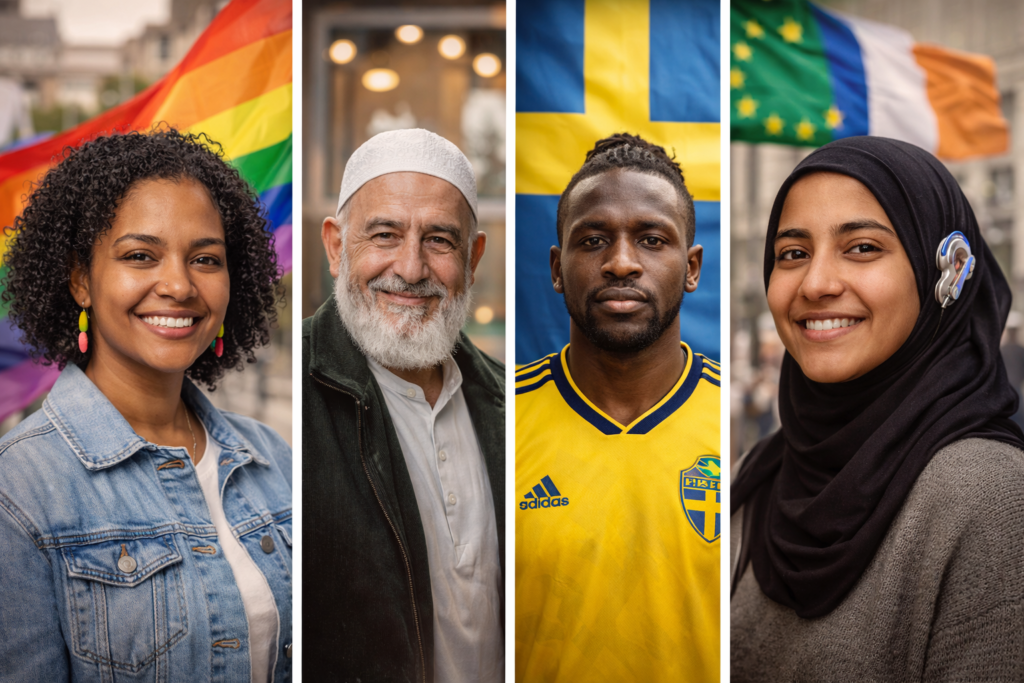
- Multiple-layered Identity: Deaf people may also identify with other groups based on gender, race, religion, or LGBTQ+ status. These overlapping identities shape their experiences in different ways.
Examples of Deaf Multi-Identities in Europe
Deaf people across Europe have different identities based on their environment and experiences:
- Third-Generation Deaf: Some families have several generations of deaf members who share traditions and a strong connection to sign language.
- Regional Differences: For example, Deaf communities in Sweden may focus on local issues like accessibility, while those in Ireland celebrate Irish Sign Language as part of their national identity.
- Intersectionality: A black deaf person in Sweden might face challenges related to both race and deafness. This shows how identities intersect and affect daily life.
Challenges for Deaf Multi-Identities
Although diversity within the Deaf community is celebrated, it can also bring challenges:
- Discrimination: Some deaf people face discrimination not just for being Deaf but also for other aspects of their identity, such as race or gender.
- Misunderstanding:People may not understand the complexity of having multiple identities. For example, some view deafness only as a disability instead of recognizing it as part of a cultural group.
How Can We Support Deaf Multi-Identities?
To support deaf people with diverse identities:
- Promote equality and respect for all forms of identity within the Deaf community.
- Include intersectional perspectives in policies and leadership roles in organizations like the European Union of the Deaf (EUD).
- Educate others about the richness of Deaf culture and its connection to other identities.
Conclusion
Deaf multi-identities show that being Deaf is not just one experience—it is a combination of culture, language, and personal history. By understanding and celebrating this diversity, we can create a more inclusive world for all members of the Deaf community.
Citations:
- https://eud.eu/world-federation-of-the-deaf-wfd-webinar-on-intersectionality/
- https://deafhistory.eu/index.php/deaf-history/deaf-politics
- https://signhealth.org.uk/wp-content/uploads/2024/08/2018-Deaf-community-as-linguistic-identity-or-disability-World-Federation-of-the-Deaf.pdf
- https://www.eud.eu/statement-on-intersectionality-3/
- https://www.deafjournalism.eu/educative-material/