

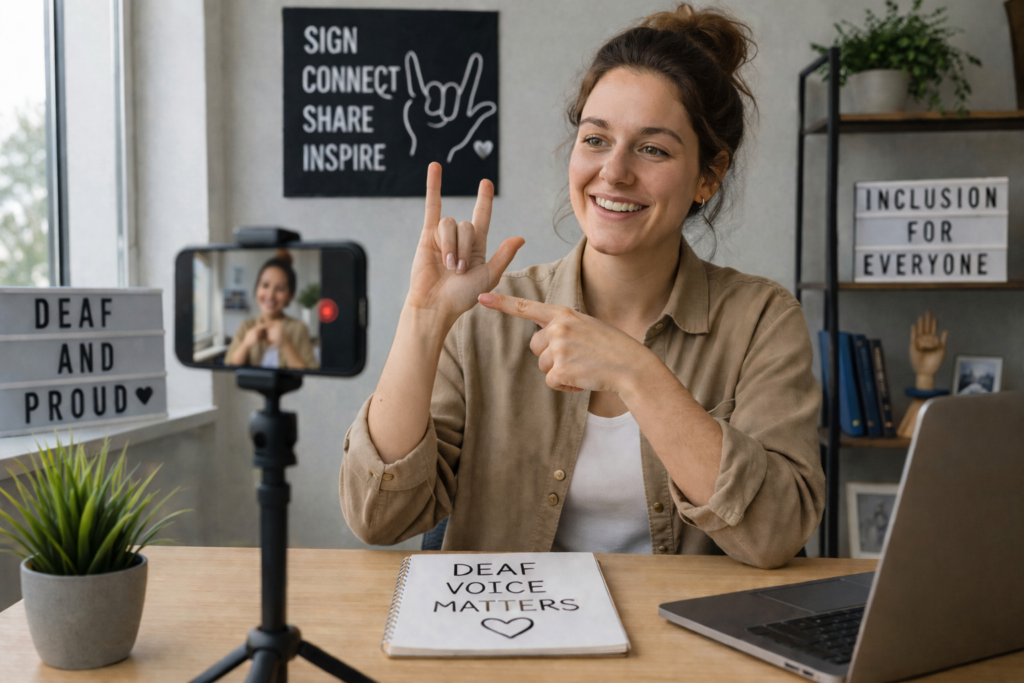
Social media has become a powerful tool that has transformed how deaf people connect, communicate, and express themselves. Let me explain what social media means for deaf people and how it helps them.
What is social media?
Social media means websites and apps like Facebook, Instagram, TikTok, and Twitter. These platforms let people share their thoughts, experiences, and stories through text, pictures, and videos without needing to hear or speak.
How social media helps deaf people
Communication
Social media helps deaf people talk to others easily using text, pictures, and videos. This removes many challenges they face in daily life, like phone calls where they cannot hear the other person or talking to hearing people who do not know sign language.
With social media and modern communication apps, deaf people can contact other people in their own sign language without needing a translator or asking a parent to call for them. This gives them more independence and makes communication easier and more personal. They also don’t have to write letters or emails in a second language, which can be difficult. Social media allows them to share their thoughts and feelings freely with both deaf and hearing people, without problems caused by language or communication barriers.
Building community
The Deaf community uses social media to:
- Connect with other deaf people worldwide
- Share everyday experiences and get advice
- Support each other during difficult times
- Organise events and meetups
Mental health benefits
Being part of online Deaf communities helps improve mental health by creating a sense of belonging. Deaf people can find support at any time of day, especially when they need it most, thanks to members being active across different time zones.
However, social media can also have negative effects on Deaf children and teenagers, just like it does for hearing youth. They may face issues such as cyberbullying, fake news, addiction, sexting, phishing, and scams. In some cases, these risks might be even greater because many Deaf youths have less access to information due to language deprivation, making them more vulnerable to online dangers.
Making changes together
Advocacy
Social media has given deaf people tools to:
- Organise rallies and protests
- Raise awareness about Deaf rights
- Challenge misconceptions about deaf people’s capabilities
- Share information about important issues
Breaking stigmas
Through social media, deaf people can demonstrate their abilities and intelligence, helping to break down prejudices. Many deaf individuals now proudly identify as Deaf (with a capital D) as a source of pride of being Deaf.
Breaking barriers
Through social media, deaf people can:
- Talk directly with hearing people
- Share their stories with the world
- Show that being Deaf doesn’t stop them from achieving their goals
- Help others understand Deaf culture better
Popular social media content
Types of content
Deaf creators share various content including:
- Educational videos about sign language
- Daily life experiences
- Deaf awareness campaigns
- Comedy and entertainment
- Support and advice for families with deaf children
Social media has truly changed how Deaf people interact with the world, giving them more opportunities to connect, share their stories, and build strong communities. It has become an essential tool for breaking down communication barriers and creating positive change for the Deaf community.
Citations:
- https://networkconference.netstudies.org/2021/2021/04/26/strengthening-deaf-community-ties-through-social-media-platforms/
- https://www.uvu.edu/is/docs/socialmediadeafcommunity.pdf
- [3] https://www.socialmediatoday.com/news/how-social-media-became-a-game-changer-for-the-deaf-community/514223/
- https://deafunity.org/article_interview/7-inspiring-social-media-accounts-about-deafness/