

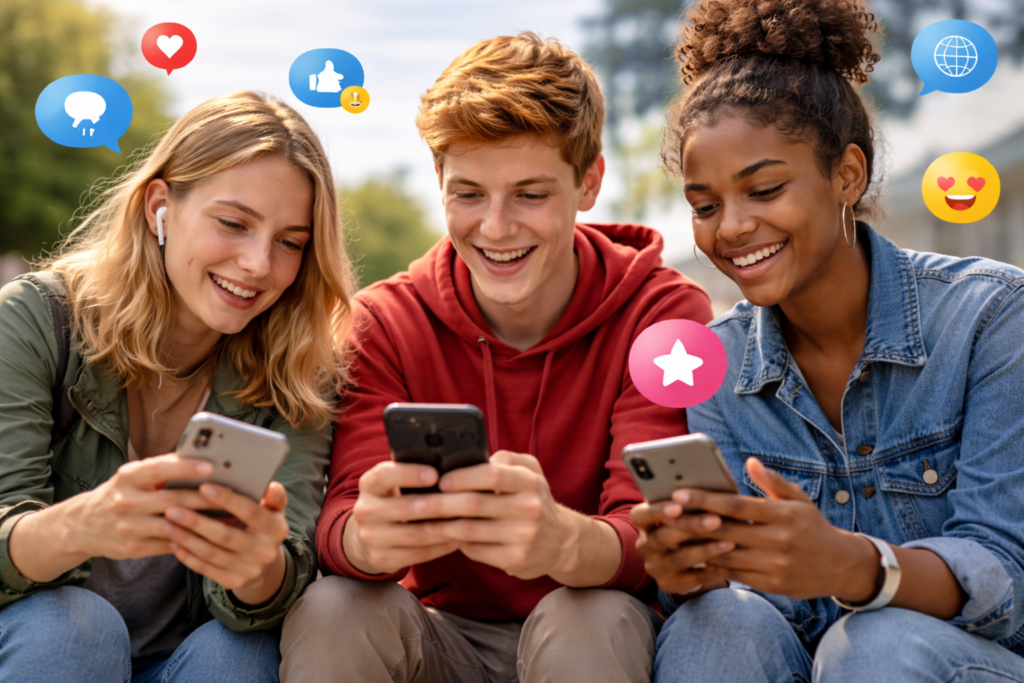
Social media is a group of online tools where people can share information, pictures, and videos. Many young people use social media every day. For Deaf youth, social media is very important. It helps them connect with friends, learn new things, and join the international Deaf community.
What Is Social Media?
Social media includes websites and apps like Instagram, Facebook, YouTube, SnapChat and TikTok. People use these platforms to post photos, write messages, and watch videos. You can also join live video events called livestreams. On livestreams, people can ask questions and talk with others in real time using chat.
Why Is Social Media Important for Deaf Youth?
- Deaf youth can meet other deaf people from different countries.
- They can share their experiences and learn about Deaf culture in Europe.
- Social media helps deaf youth feel less alone, especially if there are few deaf people in their area[1].
- Many Deaf youth use sign language in their videos, making it easy to understand without sound.
Deaf Influencers: Role Models Online
A deaf influencer is a person who is deaf and popular on social media. They share videos or photos about their life, fashion, travel, or deaf issues. Deaf influencers show that deaf people can be successful and creative.
Examples:
- Hermon and Heroda Berhane are deaf twins from UK. They have a blog and Instagram account called “Being Her.” They talk about fashion and Deaf awareness. They want to change how people think about deafness[2].
- Chella Man is a young deaf artist and activist. He uses social media to talk about Deaf rights and his life as a deaf person[2].
- Ubuntu European Deaf Youth (UEDY) is a group on Instagram for young deaf people in Europe. They share information about events and support deaf youth from different backgrounds
Livestreams and Accessibility
Livestreams are live videos on the internet. Many deaf influencers use sign language in their livestreams. Some livestreams also have captions (written words on the screen) so everyone can understand.
- Deaf youth can ask questions in the chat and get answers in real time.
- Livestreams help deaf youth learn about events, news, and culture.
- Some organisations, like the European Union of the Deaf Youth (EUDY), use livestreams for meetings and workshops
International Deaf Network
Social media helps deaf youth connect across Europe and the world. They can:
- Join international groups, like EUDY, to meet deaf youth from other countries[1].
- Share ideas and experiences about school, work, and daily life.
- Work together on projects, like fighting against cyberbullying online
Challenges
Social media is helpful, but there are also problems:
- Deaf youth can face cyberbullying (bullying online). EUDY started a special project to help Deaf youth stay safe online and fight against cyberbullying[4].
- Not all videos have captions or sign language, so sometimes information is not accessible.
- Due to language deprivation, Deaf youth are more vulnerable to fake news, fake friendships, online harassment, and bullying.
Conclusion
Social media is a powerful tool for Deaf youth in Europe. It helps them connect, learn, and share their stories. Deaf influencers show that deaf people can be leaders and role models. Organisations like EUDY support Deaf youth to make social media safer and more inclusive. Social media brings the international Deaf community closer together[3][2][1][4].