

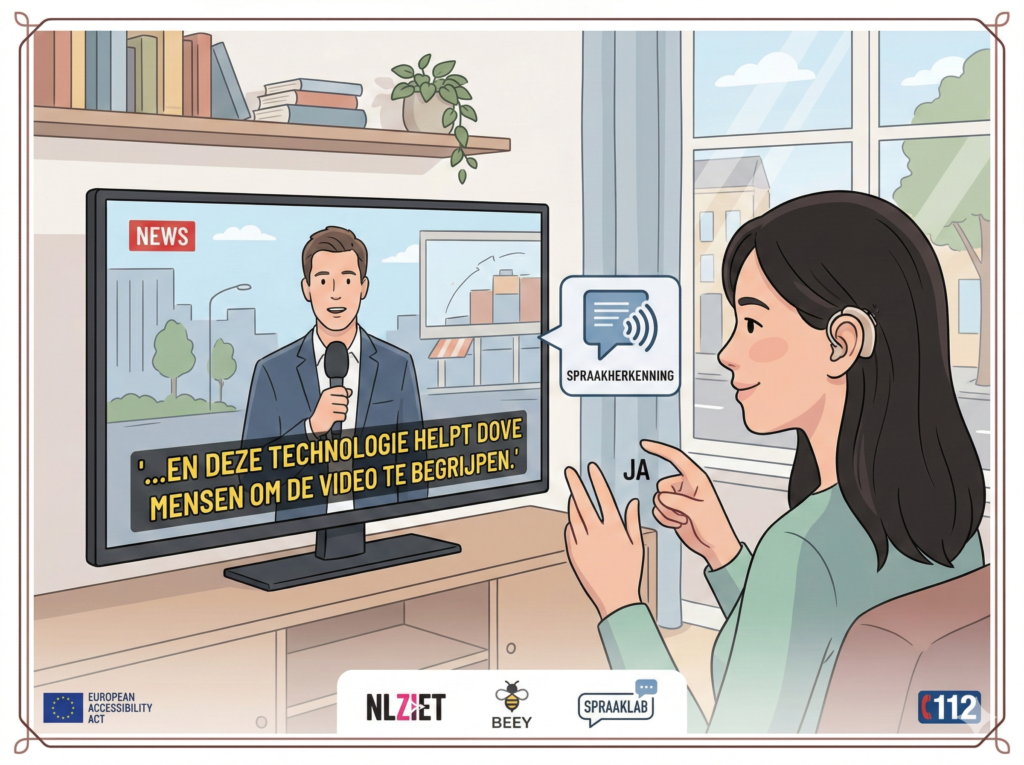
Automatically generated subtitles are words that appear at the bottom of videos. These subtitles are created by computers, not by people. The computer listens to the voices in the video and writes what people say as text. This technology helps deaf people understand what happens in videos.
How Does It Work?
The computer uses special technology called speech recognition. This technology:
- Listens to the voices in videos
- Changes the spoken words into written text
- Puts the text at the bottom of the screen
- Shows the text at the right time when people are speaking
This process happens very fast. Some systems can show subtitles with only five seconds delay[1]. This means deaf people can watch live TV and understand what is happening almost at the same time as everyone else.
New Rules in Europe
The European Union created a new law called the European Accessibility Act. This law says that by 28 June 2025:
- All pre-recorded programs (like movies and TV shows) must have subtitles[2]
- On-demand content (videos you can watch anytime) must have subtitles[2]
- Emergency calls to number 112 must be accessible to deaf people[3]
These rules will help make more videos accessible for deaf people across Europe.
Examples in Europe
Many European countries are developing automatic subtitle technology:
In the Netherlands, a TV service called NLZIET now offers real-time subtitles for live TV channels like NPO 1, RTL 4, and SBS6[4].
In Czech Republic, a company created a system called Beey that can automatically create subtitles for videos. It costs about 6 euros to subtitle a one-hour video[5].
Dutch company SpraakLab can create live subtitles with only five seconds delay, making it possible for deaf people to enjoy live events almost in real time[1].
Problems and Improvements
Automatic subtitles are not perfect. Sometimes they:
- Make mistakes with unusual words
- Have trouble with different accents
- Cannot show who is speaking
Scientists and companies in Europe are working to make automatic subtitles better. They are creating new technology that can translate speech into subtitles directly[6] and even show different speakers in different colors[7].
In the future, automatic subtitles will become more accurate and available on more videos, making them more useful for deaf people.
Citations:
- https://www.spraaklab.nl/voor-wie/media
- https://www.interprefy.com/resources/blog/european-accessibility-act-captioning-requirements
- https://accessible-eu-centre.ec.europa.eu/document/download/7bf9cb97-8ccf-421f-9d2d-6d1283e602ef_en?filename=AccEU_Guidance+on+legislation_English_acc.pdf&prefLang=mt
- https://www.spreekbuis.nl/nlziet-biedt-live-ondertiteling-bij-tv-zenders/
- https://touchit.sk/ceska-firma-prinasa-revolucny-system-na-prepis-reci-a titulkovanie-videi/349426
- https://direct.mit.edu/tacl/article/doi/10.1162/tacl_a_00607/118115/Direct-Speech-Translation-for-Automatic-Subtitling
- https://npo.nl/overnpo/toegankelijkheid/tt-888-ondertiteling